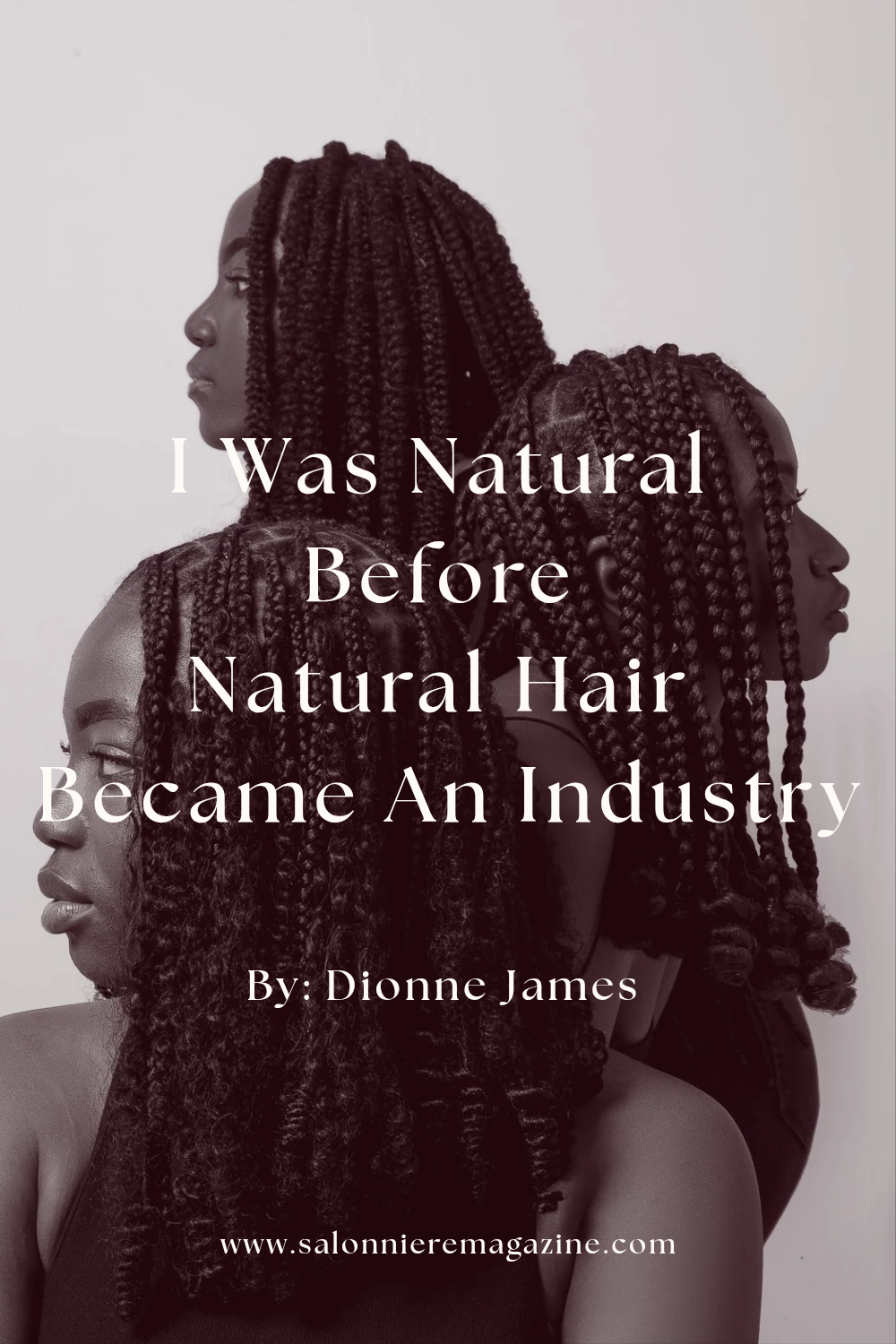
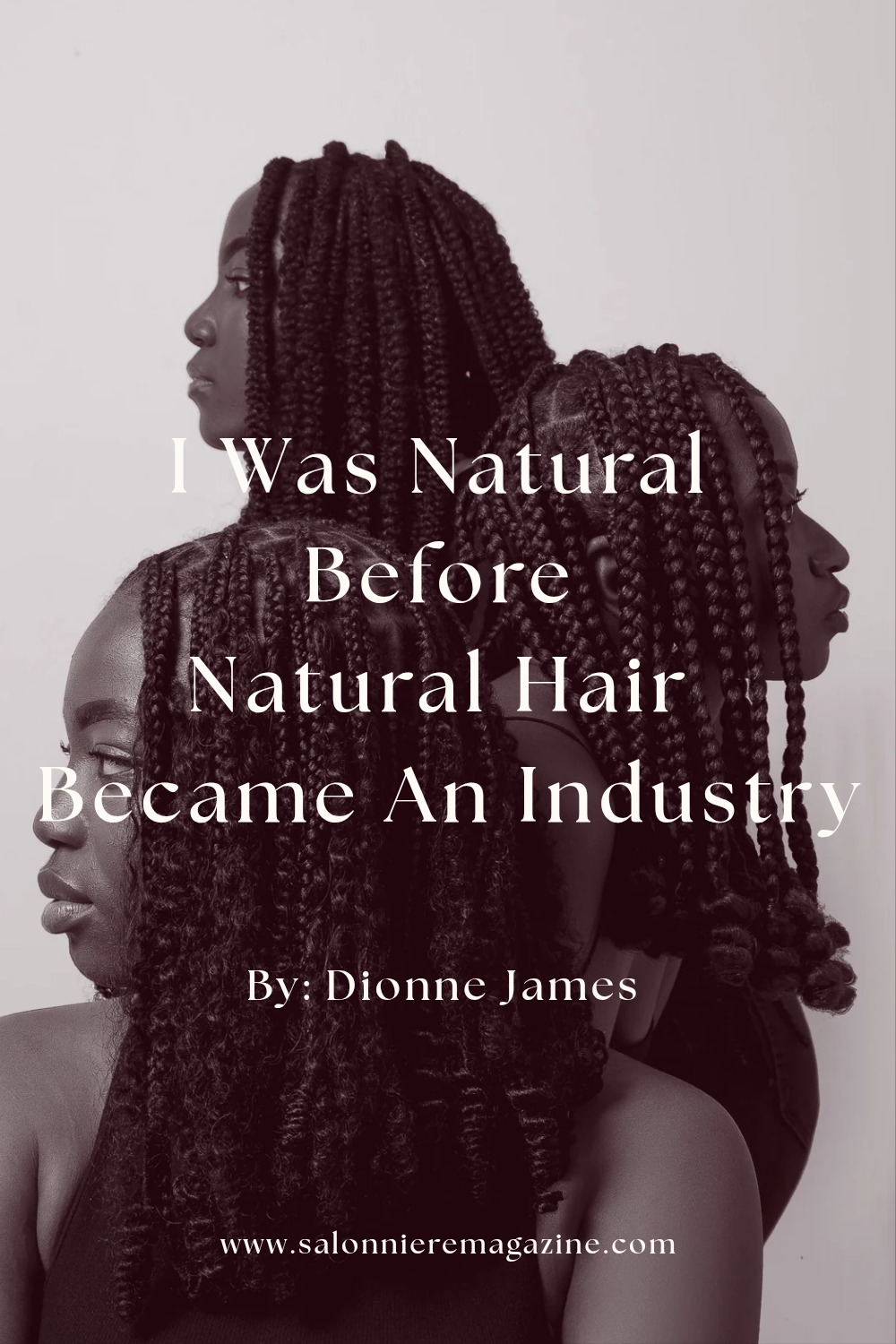
"Can you do cornrow tree braids?"
"What about invisible crochet?"
"Do you know how to do knotless?"
These are questions I still get from clients. My response is usually the same.
"Please just send me a picture."
Nine times out of ten, they're showing me something I was doing twenty-five or thirty years ago. The name might be different, but I recognize the technique immediately.
Sometimes I have to laugh. Baby, we've been doing that.
I started braiding hair when I was five years old. By twelve, I had paying customers. So when I walked into Tulani's Regal Movement on Vanderbilt Avenue in Brooklyn around 1987, I thought I knew a thing or two about braiding.
Actually, I thought I was the bomb.
I'd been doing the neighborhood children's hair for years, creating designs and even braiding letters into their cornrows. But Tulani's was a whole different world. These were professional braiders, and they operated like it.
Tulani Kinard paid me $3.35 an hour. She wasn't simply hiring braiders. She was training them.
I can still remember how her salon felt. Soothing music, a peaceful room, and rules about professionalism that were not up for discussion. You didn't talk loudly over clients' heads. You didn't bring drama into the room. You came to work, stayed focused, and respected the space.
And despite all the braiding I'd done before arriving, Tulani wouldn't let me start a client's braids.
I trimmed.
That's right. I spent my days trimming somebody else's finished braids.
I was frustrated. I knew how to braid hair. Why was I standing there trimming it?
Eventually, she let me braid down the lengths, but I never made it to starting the braids at the scalp. I was young, impatient, and convinced I was ready for more.
So I left.
Tulani had warned me that if I left, I couldn't come back. Naturally, after leaving, I tried to come back. She meant what she said.
Looking back, I understand what she was doing. She wanted us to master every part of the service, not just the part we enjoyed. To this day, I can trim braids quickly and precisely because of her.
Some lessons make more sense thirty years later.
Beautiful Hair, Unacceptable at Work
People sometimes talk about natural hair like it suddenly got popular when social media discovered it. But those of us who were behind the chair back then remember something very different.
In the late 1980s and early 1990s, natural hairstyles were not always welcome at work. Braids, twists, and locs could be seen as unprofessional. Many Black women felt pressure to straighten their hair to be taken seriously.
I remember clients coming back to the salon much earlier than expected to have their braids taken out.
Sometimes they had a job interview.
Think about that. A woman sat for hours getting her hair braided, paid for it, loved it, and then came back to have it taken out because she was worried about what an employer would think.
I remember one young woman in particular. She had just gotten her braids done. They were fresh, the parts were neat and clean, and the hair matched her natural color. When she came back and asked me to take them down for a job interview, I said, “Why? You just got your hair done. It looks beautiful.”
She told me even her own mother had warned her that she might not get the job wearing braids. That part stayed with me. Her mother wanted her to succeed, but she had learned to fear how other people might judge her daughter’s hair.
I helped her take the braids down, then washed and blow-dried her hair so she could get it pressed straight for the interview. I felt terrible about it. She had spent her money on a style she loved, and now she felt she had to undo it before anyone even met her. It was never about whether her hair was neat. It was about what people had been taught to call “professional.”
Long before anybody was talking about the CROWN Act, we were seeing hair discrimination up close, right in our own chairs.
I think about that when I see natural hairstyles celebrated today. I’m grateful that the conversation has changed. But I also remember the women who felt they had to change themselves just to get an opportunity. That kind of pressure did not always come directly from a boss. Sometimes it came from the people who loved you most.
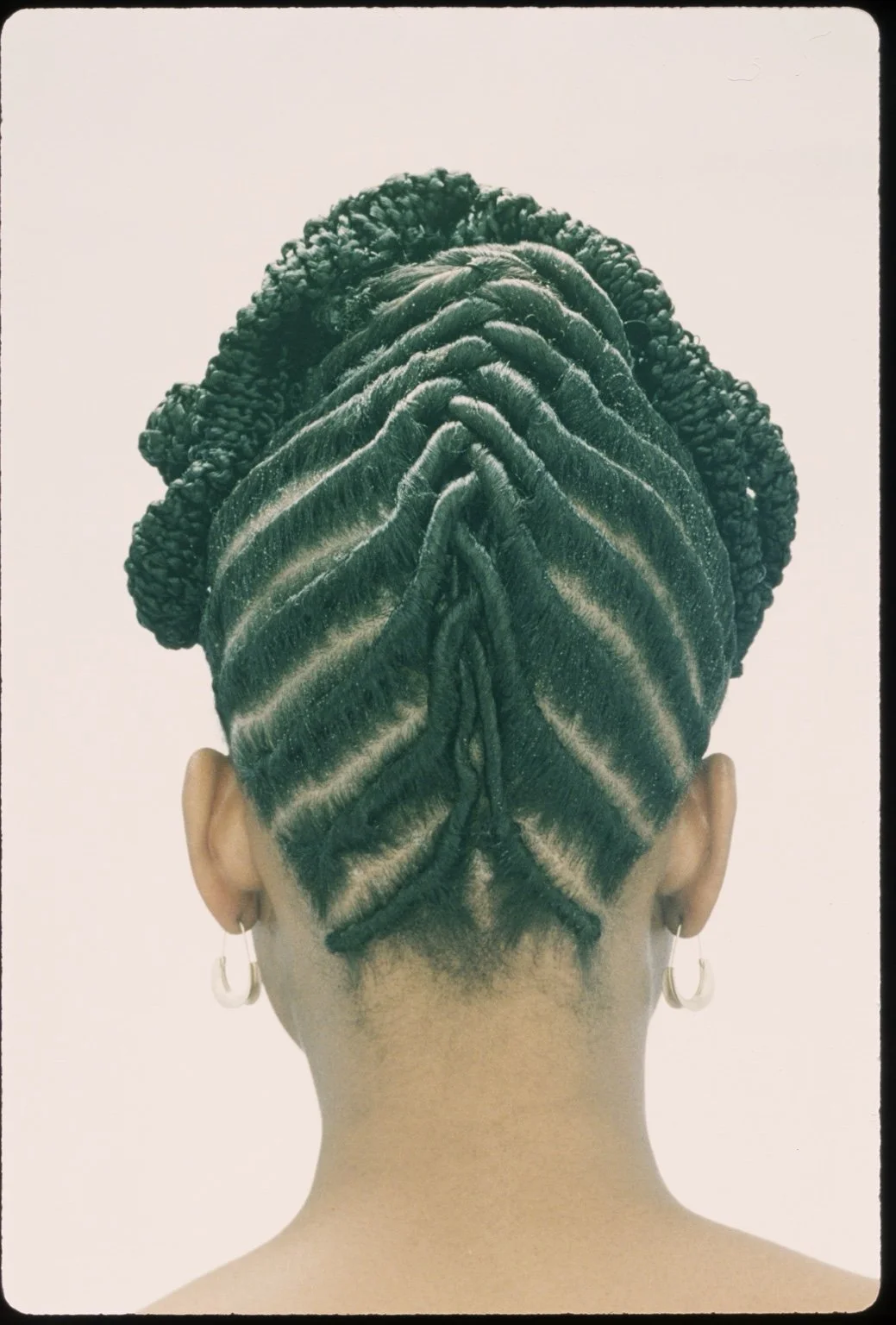
Hairstyling by Dionne James, founder of Essence of Braiding & Weaving
The Woman Who Saw My Potential
After Tulani's, I went to Designer Braids and Trade on Fulton Street in Brooklyn, where Marion Council-George took me under her wing.
Marion's salon had a completely different personality. It was more relaxed, almost like being around family. People talked, laughed, and got comfortable.
Marion used to tell me I was very serious. She wasn't wrong. I came to work, did my job, and went home.
But she saw my talent.
I became the person who regularly braided her hair, and she started getting my work featured in publications like Braids and Beauty and Sophisticate's Hair Care. She made sure my name was credited.
I remember seeing my hairstyles in those magazines and thinking, Oh, wow. My work is magazine worthy.
That meant a lot to me.
Back then, clients wanted creativity. Cornrows combined with Bantu knots. Single braids mixed with intricate designs. I often freestyled because I loved creating something different.
We weren't following viral tutorials. We were making things up, trying things out, and learning from each other.
The creativity was always there. We just didn't have a camera on us.
Taking Brooklyn to Richmond
When I moved to Richmond, Virginia, I started at Bonds Hair Salon on Marshall Street.
I was shampooing clients for a couple of dollars a head. But once the owner saw photographs of my braiding work, she believed in what I could do and advertised my services in the newspaper, and business picked up fast.
I went from shampooing to working on commission, then renting a booth. Eventually, I needed two booths and an assistant.
I was bringing techniques I'd learned in Brooklyn to a city where a lot of clients had never seen anything like them.
About ten months after arriving in Virginia, I opened what was, as far as I knew, Richmond's first salon dedicated to natural hair, on Brook Road.
It was tiny, just me and another braider, but we were busy.
One of our most popular styles was corkscrews. I charged around $85, and girls from different high schools came in asking for them. Sometimes I'd combine corkscrews with cornrows to give the style a different look.
Today, a similar service might cost two or three times that.
As the business grew, I moved into a brownstone near the YMCA. I decorated the salon with antique wooden Art Deco vanities, each station different from the next.
I eventually had six braiders, including women from different parts of West Africa, and a receptionist who earned $30,000 a year with insurance.
I was still a young woman learning how to run a business.
I even asked my mother to come work with me.
Her response?
"This is not no real business. This ain't no real job."
I understood why she saw it that way. She came from a generation where a dependable job meant working for somebody else. Here I was, a young woman without a college degree, running a salon full of braiders.
It took time for her to see what I was building. Eventually, I was even able to help with some of her bills.
So much for not being a real job.

Hairstyling by Dionne James, founder of Essence of Braiding & Weaving
What Business License?"
Nobody handed me a manual for running a business.
One day, a customer looked around my busy salon and asked, "Dionne, where's your business license?"
I looked at her. "What business license?"
She explained that I needed to go to City Hall.
My next question was, "Where's City Hall?"
She gave me the address, and I went and got my license.
I still laugh about that.
I had the talent and the customers. The paperwork side I learned as I went.
Eventually, I completed my cosmetology licensing requirements and earned my instructor's license. Years later, I developed state-approved curricula and opened my own cosmetology and barbering academy.
I had never written a curriculum before. But I knew braiding, so I started there.
The state approved it.
Then I wrote cosmetology, barbering, and nail curricula. Those were approved too.
Not bad for somebody who once had to ask where City Hall was.
Same Techniques, Different Names
Now, when someone asks if I know how to do knotless braids, I recognize the feed-in technique I learned decades ago.
Start with the client's natural hair, gradually add extension hair, and build the braid to the size you want.
The names have changed, and stylists have added their own twists, but I know what I'm looking at.
Same thing when someone asks for cornrow tree braids. I remember a technique we called interlocking, where hair was left out as the cornrows were done to give a fuller look.
I don't mind new names. That's how beauty grows.
What bothers me is when people act like these styles came out of nowhere.
Young stylists are doing incredible work, and social media has given them a reach my generation never had.
When I was starting out, I couldn't pull up a hundred tutorials to learn a technique. I had to find somebody willing to teach me, practice, and sometimes learn the hard way.
Today, a talented young braider can reach thousands of potential clients without ever buying a newspaper ad.
I think that's beautiful.
Honestly, seeing natural hair embraced now is liberating. When I opened my natural hair salon in 1992, people told me I would never make it specializing in natural hair alone. They wanted me to add chemical services. I refused. I had stopped wearing chemicals myself, and I believed our natural textures deserved a place of their own. So when I see braids, locs, and Afros on television, in advertisements, and everywhere online, I smile. I am proud I stayed with it.
Through my Youth Braiding Academy, I see children as young as seven excited to learn about their own hair. That is what moves me most. They are growing up with more freedom to love the hair they were born with. Watching that change over the decades has been one of the greatest rewards of my career.
And I do not think social media has ruined the way people learn. I think it has opened doors. Not every young girl can afford a braiding class. She might be at home with a single mother who cannot pay for lessons, but she can find a tutorial and begin learning. Even an experienced stylist can watch a video and pick up something new. That is a blessing.
Of course, not everyone teaching online knows the correct way to do things. That is why a good foundation still matters. You need to understand hair health, tension, technique, and why a method works. Because I have that foundation, I can usually tell when a tutorial is useful and when something is not right. The opportunity to learn is wonderful; the responsibility to learn well is still ours.
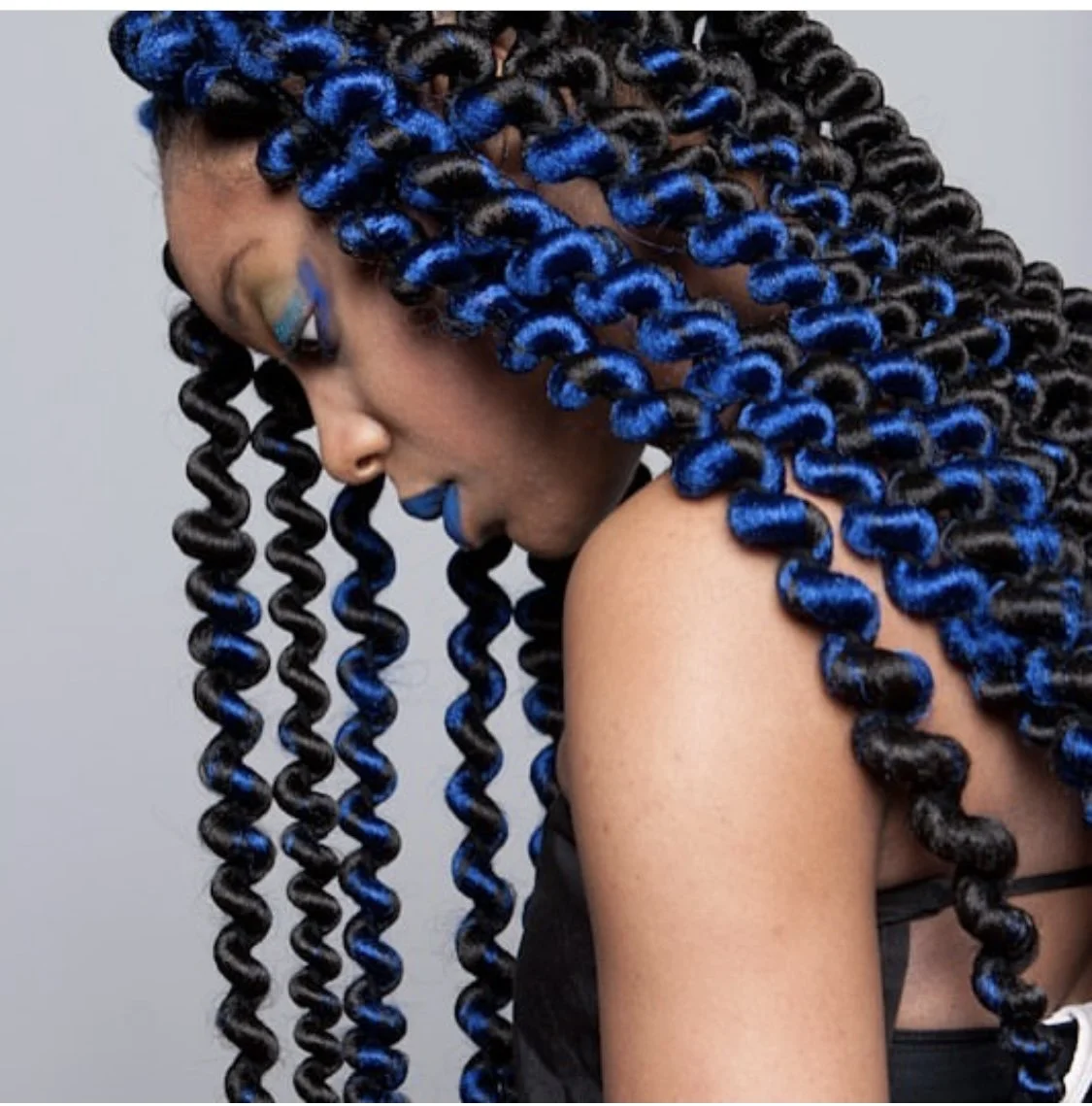
Hairstyling by Dionne James, founder of Essence of Braiding & Weaving
What Never Goes Out of Style
After more than thirty years in this business, I know people don't come back just for the hairstyle. They come back for how they felt in your chair.
My salon today is small on purpose. I see one client at a time, with a television, refreshments, and room to talk.
Some clients walk in and ask, "What are we watching today?"
We talk about their children, their parents, their lives. Those relationships are a big part of why I'm still in business.
Recently, I taught a ten-year-old girl in my braiding academy. On her first day, I asked what she wanted to be when she grew up.
"A braider," she said.
She was serious.
She came ready to learn, and when I showed her how to do twists, she picked it up in minutes.
I saw a little of myself in her.
When her six-week class ended, she didn't want to leave.
I thought about Tulani, Marion, and the women who took time to teach me back when nobody was getting followers for showing a braid.
Now it's my turn to do that for the next generation.
I want young braiders to succeed. I want them to create styles I never imagined, build businesses, and earn more than I did at their age.
I also want them to know whose shoulders they're standing on.
Because if you think natural hair started on Instagram, you haven't been here very long.
Who do you think was doing hair before all of this?
Your mother. Your grandmother. Your great-grandmother. Generations of women who braided hair in kitchens, living rooms, salons, and wherever somebody needed their hands.
Some of those women never owned a business. Some never got any credit. But what they knew got passed down anyway.
Instagram is a wonderful place to advertise. It's a wonderful place to discover talent.
But it's not where braiding began.
And it certainly won't be where it ends.
About the Author
Dionne James is a Master Cosmetologist and Licensed Cosmetology Instructor, a longtime natural hair educator, and the founder of Youth Braiding Academy. She opened her natural hair salon in Richmond, Virginia, in 1992 and later founded a state-approved cosmetology and barbering academy.
She is the author of The Hustle Is Real: A Story-Driven Business Guide to Building Wealth Behind the Chair, which draws on her experience building businesses in the beauty industry, and Braids to Bricks: 17 Properties. 5 States.1 Journey, which tells the story of how income from braiding helped her enter real estate. Her braided work is in the permanent collection of the Museum of Fine Arts, Boston.

…“Future shock is a time phenomenon, a product of the greatly accelerated rate of change in society. It arises from the super imposition of a new culture on an old one. It is culture shock in one’s own society. But its impact is far worse” (Toffler 1970, 4). When his book was first published, the insights were revolutionary. Today we are living - almost word for word - many of the scenarios he predicted would arise as a natural consequence of our inability to adapt to the pace and direction of innovation…