It’s Alive!
Imagine a jacket that fits you perfectly. It’s soft, flexible, breathable, and strong enough to withstand the most vigorous exercise and extreme weather events. Its surface bears a unique textural pattern unlike any other garment. Not because it was designed that way; because it was grown that way.
In fact, it’s still growing, because it’s alive. It senses the weather like you do and responds accordingly, managing temperature and humidity changes without added sensors or hardware. If it rips, you can just add pellets of the base material and let the living fabric repair itself. If, somehow, it gets damaged beyond repair, you can always throw it out, and in as little as 40 days, it will biodegrade, becoming indistinguishable from the soil around it.
Unfortunately, I can’t link you to the product page to buy this miraculous jacket—yet. However, this sci-fi scenario could be inching rapidly closer to reality, thanks to the growing science and industry around fungal-based biomaterials, or mycotextiles. If their potential is realized, the results could be transformative for the health of the world, as well as your wardrobe.
The Search for Sustainable Fabrics
For the past couple decades, researchers, investors, and designers alike have devoted increasing time and money to try and develop nature-based alternatives to the synthetic dyes and materials used to make most of the world’s clothes. Of all the proposed inputs for making global fashion more environmentally friendly, fungi have emerged at the forefront.
Many mushroom species have already been incorporated as one-off products by major brands like Adidas, Stella McCartney, and Lululemon, but they were one-off for a reason. There remain major obstacles before mushroom fabrics can compete to make a dent in the global textile market, at least without sacrificing their most essential attribute —sustainability.
The need for sustainable alternative fibers and textiles is an urgent one in the face of mass extinction and climate catastrophes. Each year, the fashion industry is responsible for 8-10% of global emissions and 20% of global industrial wastewater pollution – more than all international flights and shipping combined. Because unlike more expensive and niche industries, fashion is one virtually all of us participate in to live, whether we want to or not. No shirt, no service.
Growing and processing clothing materials at scale uses massive inputs of water, land, petroleum, and pesticides. All this to make a garment that might only get used for weeks before being thrown out. Then, all those toxins are likely to end up burnt into the atmosphere or piled in oceans and open-air dumping grounds, where they could take 200 years to break down, leaching into soil and groundwater all the while.
Though not a silver bullet, fungal fabrics show serious promise to help reform the global fashion industry’s appetite for destruction. But the bigger opportunity, which could actually transform the industry, depends on challenging the fundamental values beneath how modern fashion functions, in practice and in mindset. The change we need can’t be just about what we make fashion with, but also what we make fashion for.
Alternative to What?
To understand this mindset shift, let’s take the example of leather. Tanning animal hides for leather is an ancient skill, one humans have been practicing for thousands of years, but our population is far greater now, and these handy skills are no longer how most of our clothes get made. Instead, we rely on mechanized, industrial-scale animal agriculture for global leather production.
Scaling up production requires cutting down more oxygen-giving trees for more methane-emitting cattle, and the environmental damage only increases with downstream processing of cowhides using toxic chemicals and huge quantities of water. Currently, the most popular alternative leathers are made from synthetic plastics, which depend on non-renewable fossil fuels and are terrible about breaking down in the atmosphere after disposal.
Yet the leather industry is too profitable to simply abandon. In 2020 alone, the annual global market for leather goods was valued around $394 billion. And if there’s one thing modern history shows, it’s that companies under the current economic system won’t stop producing something they’re making a profit off, no matter how disastrous the externalized costs to the public or environment.
If we want sustainable leather, we have to replace it with something better. But first, we must understand what makes animal leather so special in the first place. The answer lies in its microstructure, the dense, naturally interwoven mat of collagen proteins that make cowhides so durable, water-resistant, flexible, and versatile.
In search of other densely-matted, complexly-interwoven microstructures in nature, biomaterials researchers found filamentous fungi. These environmentally essential decomposers can generate near endless amounts of microscopically interconnected, threadlike networks known as mycelium.
Mushrooms’ Moment in the Sun
For the past decade or so, mushroom mycelium has been having something of a cultural moment. Previously in the English-speaking world, mushrooms, the fruiting bodies of fungi, had been lumped together as mere “toadstools” and reviled for their sliminess, toxicity, and proximity to death.
Now, there’s a counterreaction to that fear-based mindset. A growing subset of mycophilic researchers and hobbyists recognize in fungi the qualities and connections that could help heal not just individual ills, but those of the whole Earth. The fear of fungi is still here—as evidenced by the video game and TV series The Last of Us, in which a mushroom causes a zombie apocalypse—but it’s tempered with at least as much fascination.
Instead of symbols of decay, fungi are evolving into symbols of renewal. So far, biomaterial companies have successfully patented mycelium-based chairs, lamp shades, foam, and other packing materials that perform just as well as mainstream synthetics, with far less carbon footprint.
Many of the most used species are ones even non-mycophiles might know, including standard grocery store mushrooms like criminis and oysters, as well as valued medicinals like Turkey Tail and Reishi. In all, at least 69 species have been named in different patents related to fungal leather.
One of the most exciting innovations in mushroom fabrics recently came from Cordyceps, the same species that inspired The Last of Us. Researchers at the Chinese Academy of Sciences developed this parasitic fungus into a living textile, capable of regrowing over damaged areas when supplied fresh fungal materials under humid conditions. The properties of the garment could be further modified and customized by introducing other fungi for desired qualities like color, water repellency, and UV protection.
For now, this example is an outlier in the world of mycelium-based fabrics, most of which use dead fungi cells to produce their finished materials. So far, it’s only been made into a dress for display purposes, and the ability to withstand real wear and body humidity without tearing or decomposing remain essential challenges to overcome.
The biggest benefits of mushroom-based leather alternatives revolve around sustainability. It takes about 97 square meters of land to produce 1 kg of cow, compared to one square meter for 1 kg of mushrooms, with space consolidated in high-density vertical agriculture. Making bovine leather emits more than 12 times as much carbon as Reishi leather.
Instead of relying on petroleum or animal inputs from mines and ranches across the globe, mycelium can grow on agricultural waste sourced from local farms, like cornstalks. On the other end of the product’s lifecycle, mycelium-based fabrics can be composted and degrade back into the sSoil in a matter of months, rather than centuries.
These prospects don’t apply equally for all mushroom-based fabrics, however. Each company, material, and metric must be evaluated on its own merits to meet any real sustainability goals, or else we risk just perpetuating environmental greenwashing.
“For businesses, the opportunity is to develop new material capabilities, diversify supply chains, and create products with demonstrable environmental advantages,” says Tara Chittenden, an independent researcher and Foresight Manager at the Law Society of England & Wales. “But those advantages must be established for the specific material and product, rather than inferred from the fact that fungi are involved.”
When it comes to leather, the challenge remains to engineer mycelium fabrics that are flexible and water-resistant enough to bend without breaking and get wet without decomposing. Most attempts to compete and achieve these ends, however, take the mycelium further away from its natural origins, requiring increased inputs and processing that risk reducing sustainability.
The Problem of Scale
Though often displayed at fashion outlets around the world, access to mushroom-based fibers is still fragmented. Many materials are only available through research collaborations, specialized suppliers, or direct relationships. Most are sold through ecommerce or upstream of your everyday consumers’ reach, as large sheets of mycelium-based fabric not yet refined into clothing.
While still considerable, the pace of growth from mushroom-based fabrics hasn’t met the optimistic projections. Recently, Mycoworks, a pioneer in mycotextiles, was bought out by the investment firm DFX Corp, resulting in employee layoffs, facility shutdown, and the shift from mycelium cultivation and processing to just processing. While the technical breakthroughs keep trickling in, the rate of adoption remains dispiritingly low compared to the hype.
“Scalability is probably the most complex challenge facing the emerging biomaterials industry,” writes Luca Bianucci, QX of LifeMaterials, a QX intended to make innovative materials more accessible to designers, researchers, small companies, and artisans alike.
Many companies and research teams are investigating gene resequencing and bonding fungi with other inputs to address these issues, helping their products appear or perform more like conventional fabrics. MuSkin from Life Materials takes a different approach, closer to the hand-crafted mushroom materials found throughout human history.
Instead of cultivating mushroom mycelium in controlled labs or vertical agriculture, MuSkin harvests their stock directly from the suede-like insides of Phellinus ellipsoideus, a polypore tree fungus found growing naturally in subtropical forests.
“For us, its greatest advantage is not necessarily that it can replace conventional materials in every application,” says Bianucci, “but that it offers designers something genuinely different.”
The resulting fabric is soft and unique in every inch, but can’t withstand the same stressors as well-known competitors like leather. To improve its performance, they’ve developed backings and heat treatments for offshoots like Laminated Muskin and Slim Muskin. Ultimately though, Muskin embraces these natural variables as features, not bugs.
“Our approach is to identify applications where its distinctive properties represent an advantage rather than trying to force it into applications for which it was never naturally suited,” says Bianucci. “This distinction is essential.”
A Brief History of Mushroom Fabrics
The bioengineering breakthroughs needed to re-sequence fungal DNA for an adequate leather replacement could be decades away. Yet when it comes to addressing the environmental costs of modern fast fashion, we don’t really have decades to spare. Maybe, instead of purely seeking futuristic innovations, we should try learning from the past as well.
Mushrooms being used for clothing is nothing new. For most cultures across human history, the main point of interaction with mushrooms seems to have been as food and medicine, but there are also numerous examples of people using fungal species for fabrics.
For example, Amadou is a lightweight, insulating, and naturally-absorbent felt indigenous to parts of Europe. It’s made from the inner cap of Fomes fomentarius, another polypore found growing on decaying conifer and beech trees. Its nickname ‘tinder fungus’ reflects its additional use as a portable fire starter, which was found on a naturally frozen mummy in Germany dating back to the 4th millenium BC. In the present day, radical mycologist Paul Stamets – the closet thing this mushroom moment has to a mascot – famously wears a hat made of Amadou.
Crafting dashing hats and pouches from Amadou was once a common skill across Central and Eastern Europe. Today, it continues in pockets like the Transylvanian village of Corund, though threatened by the demanding distractions of digital culture. Finnish designer Mari Koppanen made a master’s project of preserving the ancient craft, honoring the sustainable history while presenting modern styles like natural-chic coasters, upholstered birch stools, and warped sensorial bowls.
In North America, another polypore, Agaricon (Laricifome officinalis), carried spiritual significance as tribal shamans’ masks and gravestones among the Tlingit, Haida, and Tsimshian of the Pacific Northwest coast. Only recently have researchers pieced together evidence that the same species may have been used in wall pouches and cradleboards for diaper rash, which seems consistent with loggers using it for wounds and ancient Greeks for tuberculosis.
Like Muskin, the material for Amadou comes from the inner layer of the mushroom’s cap and pores, or trama. In textiles, trama also refers to the weft of a garment, or the crosswise threads woven over and under each other. We’ll never know how much more historical knowledge of mushroom-based fiber crafts has been lost, but even this shared Latin root in how they’re talked about makes one wonder.
Today, modern companies have cloned and cultured strains of the now-endangered Agaricon, but can’t reproduce a material as strong as the pouches still hanging on museum walls after centuries of decay.
Closing the Loop
Humans have always made clothes from nature. Over the past couple centuries, we’ve gotten sloppy, and the results are piling up. The origin of fungal-based fabrics in the first place stems from the principles of biomimicry, or looking to nature for inspiration in the design of human societies.
So let’s use the inspiration of a common deciduous tree, like maples. Each autumn a maple changes its leaves, much like we change our clothes. When the weather shifts in autumn, the tree sheds its old threads. By next spring, the tree has grown a fresh new look. In the meantime, last year’s leaves have biodegraded back into the soil.
The clothes we shed aren’t made to biodegrade. Instead, they keep piling up, threatening to suffocate the whole ecosystem around us. If we want a sustainable fashion industry, or a livable future for humanity, we need clothes that can decay back into nature once we’re done with them. Like the trees, the key to closing our loops could lie in partnering with fungi.
Instead of trying to bioengineer a one-size-fits-all approach to replacing leather, what if we diversified? Even if one mushroom-based fabric could check all the boxes to compare with leather in terms of quality, scaling up production to meet global demand would require huge amounts of substrate to grow the fungi. If not locally sourced, the carbon footprint to make the material would quickly increase.
As Chittenden notes, “Mycelium could help reduce waste, but it cannot solve a business model that continually generates it.”
Following Leopold Kohr’s philosophy that, “whenever something is wrong, something is too big,” seeking another material to meet the whole world’s clothing needs would just reproduce the same root problem. We’d just be replacing one problematic production process with another. Drawing from our evolutionary history, the European and North American tribes who made fabrics from their local mushrooms never sought to scale and export them globally.
We tend to assume this is just because they lacked the capability, but what if they also understood what it would cost? What if, instead of seeking convenience and uniformity, we too valued the diversity of fabrics and the individual or culture’s relationship to them?
“In fashion, innovation should not always mean reproducing existing materials with a different raw ingredient,” says Bianucci. “Sometimes it means discovering entirely new possibilities… We need fungal fibers that are proud of their unique quirks as features, rather than try to apologize for not being leather.”
Another model for diversifying fashion’s supply chains while still looking forward comes from Dutch designer Aniela Hoitink, the chief creative force behind MycoTEX, which has a production process unlike any other. Her manufacturing method, called NEFFA, or New Fashion Factory, first cultivates a biomass of Reishi and Amadou mycelium in large fermenters. After mixing with other biodegradable natural materials, the base material is applied by manufacturing robots onto 3D molds that can be customized to a wearer’s exact dimensions.
“The holy grail in fashion is personalisation on a mass production level,” Hoitink told the European Investment Bank. “The goal that we have set is to become a new manufacturing method next to cutting, sewing, and knitting.”
As well as high-tech solutions, transforming fashion must also entail placing new emphasis on local handmade production, reinvigorating the natural fiber crafts that are essential attributes of intact human cultures.
Through working with local materials, unmediated by global supply chains, we build relationships with the living plants, animals, and fungi that become our clothes. We stop treating them as unfeeling materials to mold into whatever shape we desire from them, and start recognizing them as partners we depend upon to shape the surface aesthetics and underlying meaning threaded through our daily lives.
Will we design with nature, rather than extracting from it? Can we learn to value diversity in our clothing, even at the cost of scalability or uniformity? Can we make clothes whose full lifecycle is considered and respected through production, use, disposal, and renewal, rather than writing off our clothes’ origins and fates until the plastic tides reach our doors?
Ultimately, this decision lies more with fashion designers and companies than consumers at some point, to use their preexisting marketing infrastructure to educate consumers on why they should want something different, guiding us with not only environmental but aesthetic incentives towards a future for fashion the Earth can actually sustain or even benefit from.
Because sustainability isn’t a luxury only a privileged few can afford to pay a premium for. It’s a necessity for human life as we know it to continue.
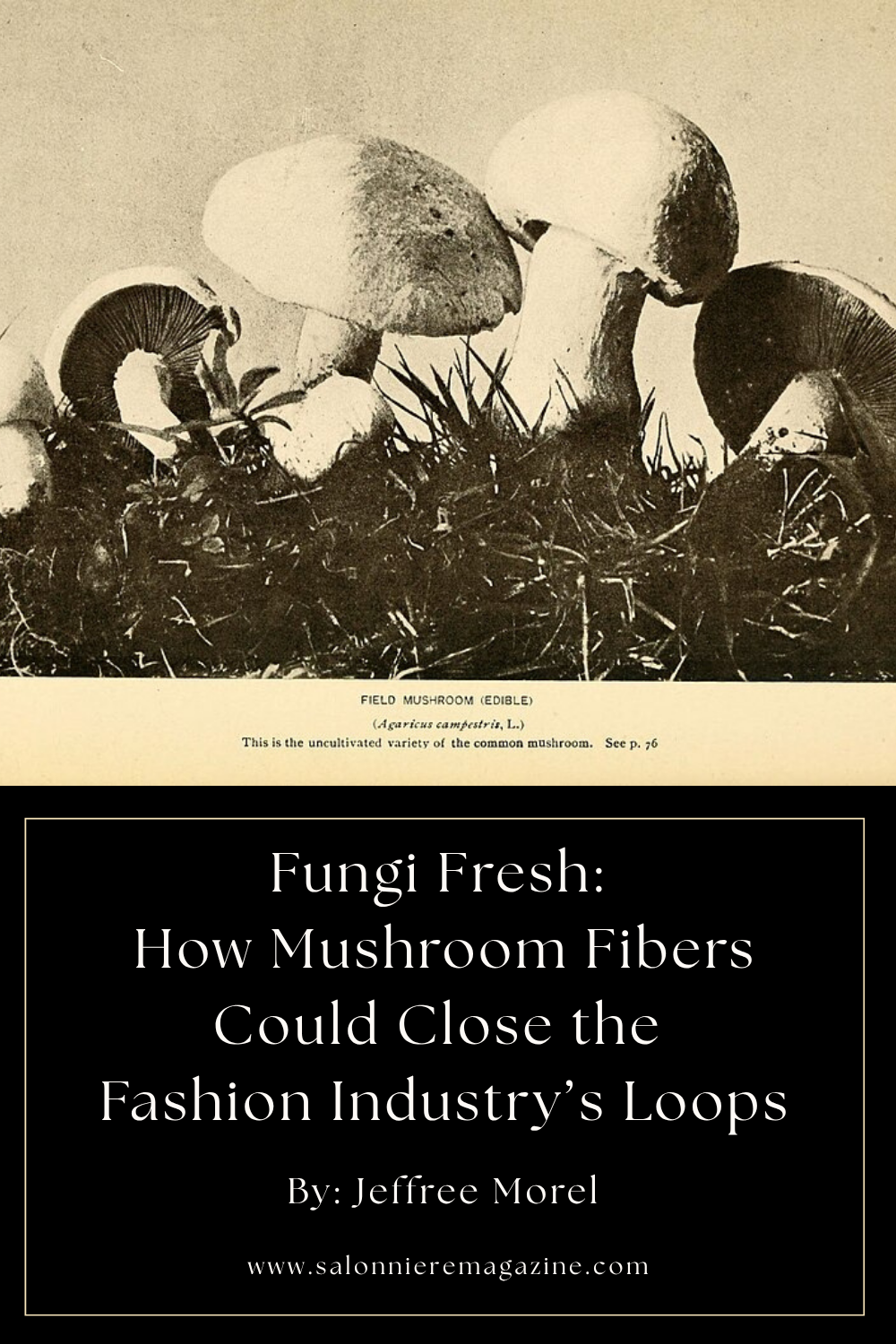
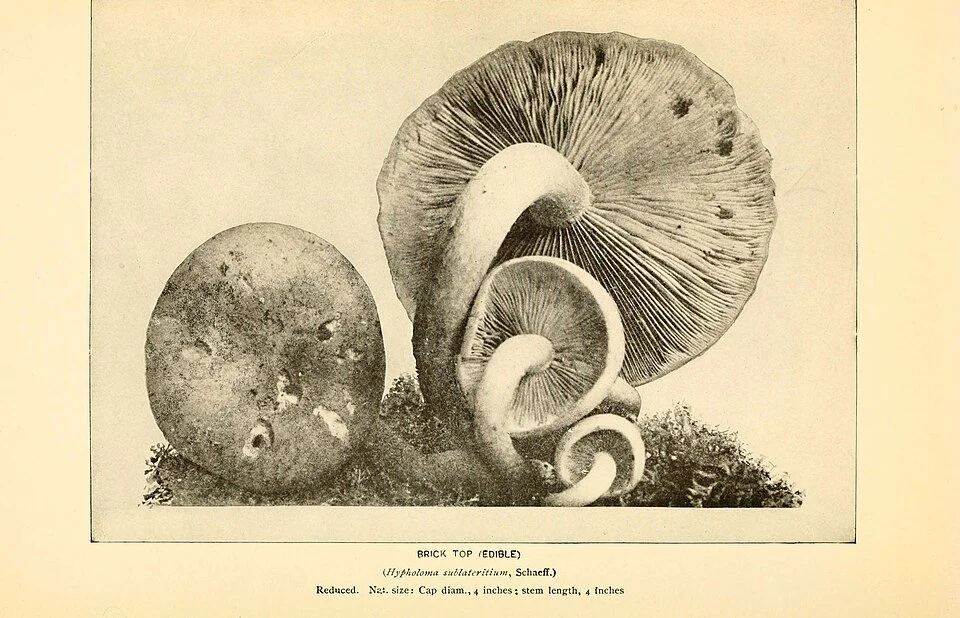
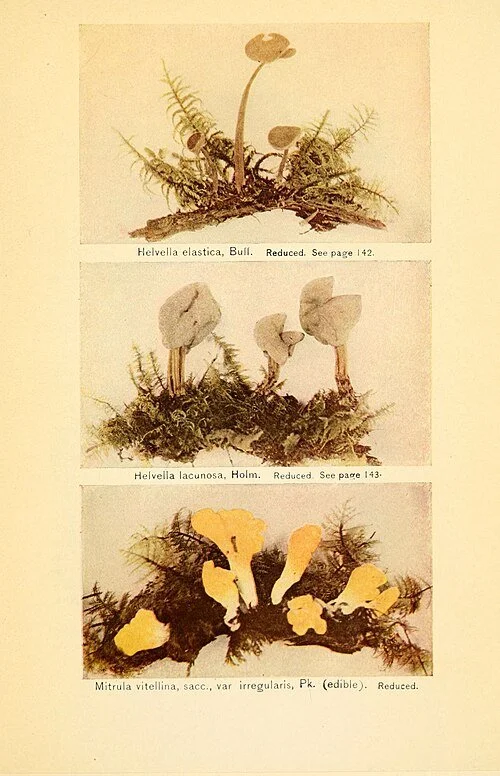
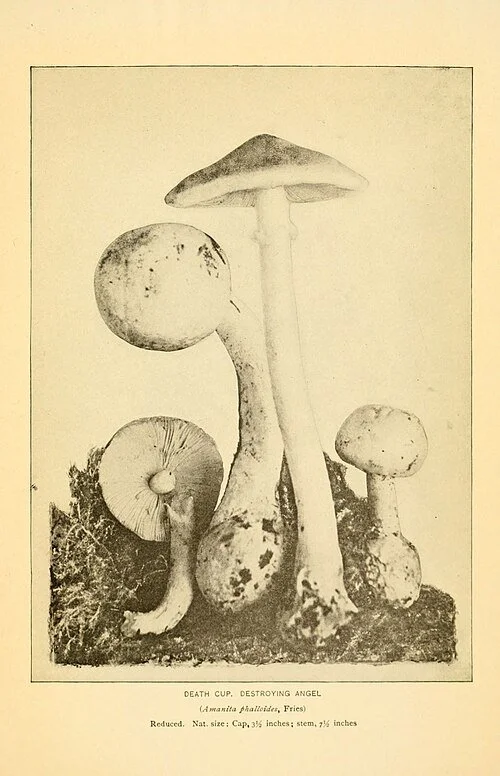
All images sourced from The Mushroom Book: A Popular Guide To The Identification And Study Of Our Commoner Fungi, With Special Emphasis On The Edible Varieties by Nina L. Marshall; with many illustrations in color and black and white, photographed from nature by J.A. & H.C. Anderson.
About The Author
Jeffree Morel is a multidisciplinary writer, editor, and educator. He writes fiction, nonfiction, poetry, and screenplays with thematic interests combining ecology, mythology, and personal narrative.
His stories and poetry have been featured in publications such as the South Seattle Emerald, Weber: The Contemporary West, Tethered by Letters, F(r)iction, and Rabble Review. His blog is Foraging for More on Substack, and his first poetry chapbook, Ego Killers, is available in print and ebook. His screenplay In Your Dreams received the Oregon Literary Fellowship for the drama category in 2026, and he is currently working on his first full-length poetry collection, Breakup Flavors. He also offers contract copywriting and developmental editing services under the banner of Regenerative Writing.
Other than writing, he enjoys reading, drawing, jogging, singing, dancing, cooking, watching movies, practicing yoga, foraging for wild foods, spending time with loved ones, speculating on big questions, and acting weird to counteract the monotony. He is both a cat person and a dog person.
…“Future shock is a time phenomenon, a product of the greatly accelerated rate of change in society. It arises from the super imposition of a new culture on an old one. It is culture shock in one’s own society. But its impact is far worse” (Toffler 1970, 4). When his book was first published, the insights were revolutionary. Today we are living - almost word for word - many of the scenarios he predicted would arise as a natural consequence of our inability to adapt to the pace and direction of innovation…